Glamping promises the best of both worlds: real beds and hot showers out in nature. But once you start browsing, the listings blur together. Is a safari tent right for a rainy mountain weekend? Will a dome keep you warm in October? Does a yurt feel cramped or cozy? Choosing the wrong glamping tent can turn a dream trip into a soggy, sleepless one.
This guide breaks down the three most popular styles so you can match the tent to your trip. We’ll look at what kind of glamping tent fits different travel goals, then compare safari tents, geodesic domes and yurts in terms of space, weather protection and price. You’ll also find advice on booking windows, how to match each tent type to a climate and destination, and a short wrap-up to help you decide with confidence.
What Kind of Glamping Tent Fits Your Trip?
The fastest way to narrow your options is to ask what the trip is actually about. A couple chasing dark skies for stargazing needs something very different from a family spending a week beside a lake, or travelers heading out on a wildlife safari where the whole point is waking up to birdsong on an open deck.
Think of your main goal as scenery, weather protection or interior comfort. Scenery-focused trips, like northern-light hunting or desert stargazing, benefit from tents with transparent panels and exposed views. Weather protection matters most in shoulder seasons, when wind, cold snaps or early snow can flatten a basic canvas setup. Interior comfort wins for longer stays, where space to spread out, a proper lounge area and solid insulation matter more than panoramic windows.
Once you know your priority, the tent types sort themselves out fairly neatly:
- Safari tents work best in wildlife areas such as savanna reserves and game parks, where warm, dry seasons let you live half outdoors on a raised, open-air deck with mesh screens keeping insects out at night.
- Geodesic domes shine on stargazing trips and shoulder-season getaways, since their triangulated frames cope with windier, colder sites that would strain flat canvas walls.
- Yurts suit cooler climates and stays of several nights or more, appealing to travelers who want a round, snug interior with a wood stove rather than maximum window space.
Match the tent to the goal first, then filter by destination and season. That order saves you from falling for a beautiful photo of a tent that simply doesn’t fit your trip.
Safari Tents: Space and Shade in Warm Climates
Safari tents are the classic choice for warm, dry destinations, and for good reason. These are large canvas structures, typically 30-60 m², with separate sleeping and lounge areas plus a veranda where you can sit with morning coffee and watch the landscape. Many sleep 2-5 guests comfortably, which makes them a strong pick for families or two couples traveling together.
Their main strength is also their main limitation: canvas walls breathe beautifully in dry heat but struggle with heavy rain. Safari tents perform best in dry, warm months, and many operators limit availability during the rainiest season, so always confirm a site’s wet months before booking.
What to Look For
Comfort markers separate a great safari tent from a basic one. Elevated wooden decks keep you off damp ground and add that classic out-of-Africa feeling. Mesh screens on windows and doors are essential for airflow without insects. An en-suite bathroom inside the tent, rather than a shared facility down the path, is the clearest sign you’re booking a genuinely comfortable unit.
Expect roughly $150-400 per night for quality safari tents, with prices rising for larger layouts, private decks and prime locations. If you’re pairing a tent stay with a coastal trip, consider combining it with a beach destination like Jordan’s Red Sea coast, where warm days and coral-brilliant water make an easy extension to a dry-season safari itinerary.
Geodesic Domes: All-Season Structure and Sky Views
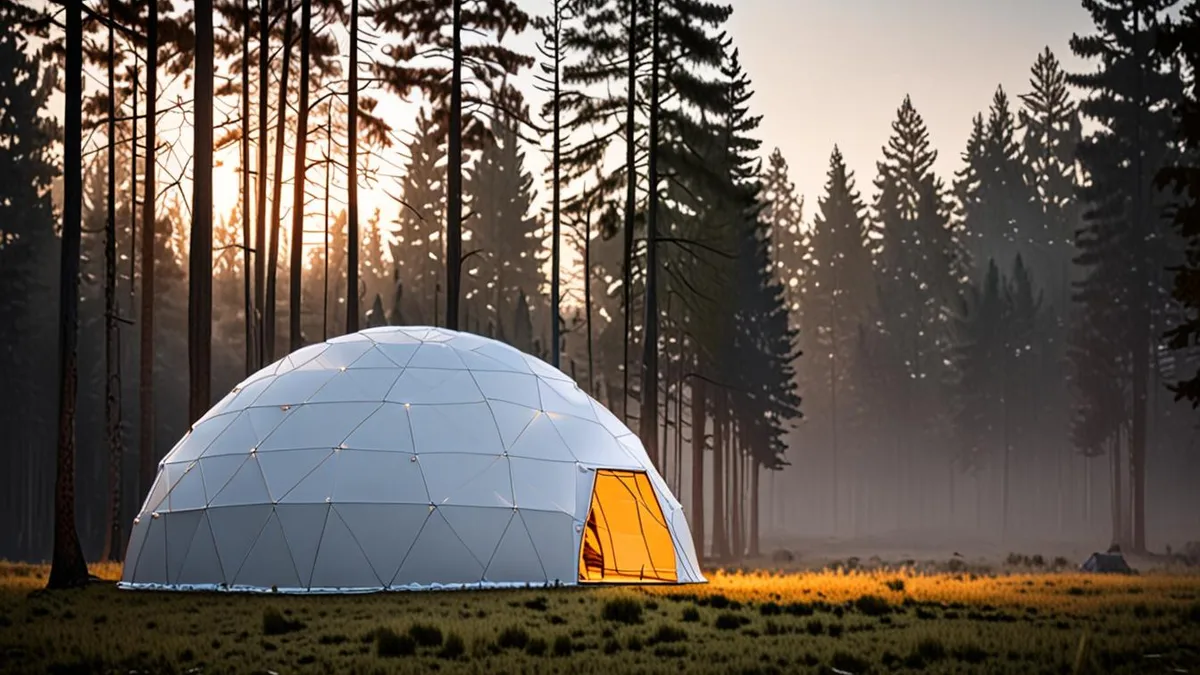
Geodesic domes have become the poster child of modern glamping, and their popularity comes down to engineering. The triangulated frame distributes stress across the whole structure, so domes shed wind and snow loads far better than flat-roofed canvas designs. That structural strength extends the season: a dome that would be risky in a windy coastal site or a mountain valley with early snowfall stays comfortable well beyond summer.
Why Domes Win for Stargazing
Clear ceiling panels above the bed make domes the top pick for stargazing and northern-light trips. You can lie in bed and watch the sky, which no other tent type offers in quite the same way. If aurora hunting or Milky Way viewing is the core purpose of your trip, a dome is usually the right answer.
Check the Interior Before You Book
The trade-off is space. Domes are usually compact, around 20-40 m², so check the bed size and bathroom setup carefully in the listing. Some units squeeze in a full en-suite bathroom; others use a separate facility building. If you’re tall or traveling with luggage for a week, ask about floor space and storage before committing.
Prices typically run $180-500 per night depending on amenities and location. Keep in mind that the most photogenic domes, the ones with dramatic views and full glass ceilings, tend to book out 3-6 months ahead, so reserve early for popular dates.
Yurts: Cozy Round Living for Cooler Seasons
Yurts have been keeping nomads warm for centuries, and the design still works. The circular lattice wall with its tensioned fabric cover holds heat far better than a flat canvas panel, which is why yurts feel comfortable in spring and autumn when nights turn chilly but days are still pleasant.
The interior layout suits longer stays too. A central skylight lets in daylight and gives you a view of the night sky, while the open floor plan means you can usually spread out with a bed, a small seating area and space for luggage without feeling cramped. If your trip involves settling in for several nights at one spot, a yurt rewards that slower pace.
Check the heating before you book
Not all yurts are built alike. Basic models with thin canvas covers can be genuinely cold outside the May-September window, so ask the operator about insulation layers and whether there is a wood stove or other heating inside. A yurt with a proper stove lets you sit by the fire while rain or frost does its thing outside, which is half the charm.
Price is another strong argument. Yurts are usually the most affordable glamping option, commonly running roughly $100-300 per night. That makes them a smart pick if you want the glamping experience without the top-tier price tag, especially on a longer stay where nightly savings add up.
Comparing Comfort, Price and Booking Windows
Once you have shortlisted a tent type, it helps to step back and compare the three on the things that actually shape your trip: how comfortable you will be, what you will pay, and how far ahead you need to book. The pattern is fairly consistent across most glamping sites, so a little planning goes a long way.
On amenities, safari tents usually lead the pack. They tend to come with the most space, en-suite bathrooms and proper furniture. Domes generally sit in the middle, often well equipped but more compact. Yurts typically offer the simplest setup, though a well-insulated one with a stove can be very comfortable in its own right.
Budgets differ accordingly, and each tent type has its own typical nightly range, so decide early which end of the market you are shopping in. Booking windows matter just as much as price, because the best units rarely sit empty in summer. If you know your dates, reserve early rather than waiting for deals that may never appear at popular sites.
- Peak-season demand is real: for May-September dates in most temperate regions, reserve any tent type 3-6 months in advance to get your pick of units and layouts.
- Shoulder season works in your favor: trips in April-May or September-October usually mean better availability, softer rates and quieter sites, though pack layers for cooler nights.
- Midweek stays stretch your budget: many operators price Friday and Saturday nights higher, so shifting your stay to midweek can bring the effective nightly cost down within your chosen range.
Matching the Glamping Tent to Climate and Destination
The best tent type often depends less on taste and more on where you are going. Matching the structure to the climate is the single most reliable way to avoid a disappointing booking.
Dry savanna, desert and tropical coastal settings favor safari tents, and they make the most of these places during the local dry season. The open decks, mesh screens and shaded canvas walls are built for warm air and wide views, not for days of steady rain.
Wind, snow and cold nights
Mountain, coastal and northern sites with strong wind or early snow favor domes. Their triangulated frame copes with harsh weather far more effectively than flat-roof canvas designs, which is why dome sites often stay open later into the year than tented camps nearby.
Forest and lakeside settings with cold nights favor insulated yurts. The round, heat-retaining structure suits exactly that mix of fresh days and chilly evenings, and a wood stove inside turns a cool autumn weekend into something genuinely cozy.
One habit worth building: always confirm the site’s rainiest months before booking. Canvas structures often close during heavy-rain periods, so the dates you have in mind may not even be available. A quick message to the operator about their season and wettest months can save you a cancelled trip and help you pick the tent type that fits the destination, not just the photo.
Wrapping Up Your Glamping Tent Choice
Choosing between a safari tent, dome and yurt comes down to three things: your destination’s climate, what you want from the interior, and your budget. Safari tents give you the most space in warm, dry seasons, domes handle wind and cold best while adding sky views, and yurts win on price and cosiness for cooler months. Match the tent to your trip goal first, and everything else falls into place.
On money, expect roughly $100 to $500 per night depending on tent type, with yurts at the lower end and domes at the top. Whatever you pick, book 3-6 months ahead to secure the best peak-season options. If this guide helped you decide, leave a comment or share it with a friend planning their first glamping trip.