Glamping in New Zealand sounds simple in theory: sleep under canvas surrounded by mountains, lakes or coastline, but with a proper bed and a hot shower. In practice, first-timers quickly hit the same questions. Which region deserves your limited days? Which season gives you the best odds of good weather? And which stay type, from safari tents to glass-roofed domes, actually delivers on comfort?
This guide walks you through those decisions step by step. We start with why the country works so well for first-time glampers, then compare the best regions for a first trip, explain when to book and what each season feels like, and break down the main stay types. You will also find realistic price guidance, practical logistics like rental cars and packing, and a short wrap-up to pull it all together. By the end, you should be able to book your first night under canvas with confidence rather than guesswork.
Why New Zealand Suits First-Time Glampers
New Zealand packs an remarkable amount of scenery into a country you can cross in a few hours of driving. On a single two-week itinerary, it is realistic to combine alpine mountains, a rugged coast and a glassy lake country, without the exhausting internal flights or long border crossings that complicate first trips elsewhere. That compact scale matters when you are trying glamping for the first time: if one region disappoints, the next is rarely far away.
The operators here are also well established, which eases the step up from ordinary camping. Expect real beds with proper mattresses, en-suite bathrooms or private facilities, and heating in most purpose-built stays. You get the outdoor setting without the thin sleeping mats and shared ablution blocks that put many people off camping in the first place.
Less to worry about, more to enjoy
Language and safety remove the usual first-trip anxieties. Hosts speak English, communication before arrival is straightforward, and the country’s general safety standards are high, from well-maintained sites to clear emergency procedures. If something goes wrong, a flat tire or a change of plans, you can sort it out with a phone call rather than a translation app. For a first glamping experience, that combination of comfort and low friction is hard to beat.
Best Regions for Glamping in New Zealand
New Zealand is small enough that your choice of region shapes the whole character of the trip, so it pays to match the landscape to what you actually want from your first glamping night. The good news is that the country’s most popular first-timer regions each deliver something distinct, from alpine stargazing to warm coastal water.
In the South Island, Mackenzie Country near Lake Tekapo sits inside a dark-sky reserve, so the night sky becomes part of the experience rather than a bonus. Alpine tent sites here pair crisp mountain air with some of the clearest stargazing conditions you will find anywhere. In the far north, the Bay of Islands offers a gentler introduction: coastal domes, warm water for swimming, and mild temperatures that make canvas comfortable for most of the year.
- Queenstown-Lakes suits travelers who want mountain-lake drama with easy access to a full-service town, so you can combine a night under canvas with restaurants and adventure activities nearby.
- Marlborough puts you in wine country, where glamping stays often sit within a short drive of cellar doors and the Marlborough Sounds’ sheltered waterways.
- Rotorua is the North Island’s standout for a first trip, blending steaming geothermal landscapes with bush retreats where native birdsong replaces traffic noise.
A practical tip: rather than trying to see three regions in one short trip, pick the one whose daytime setting you care about most. The glamping experience itself, the tent, the view, the morning coffee outside, is similar across regions; the scenery around it is what differs.
Choosing Your Season and When to Book
Timing shapes both your comfort and your budget. New Zealand’s summer runs from December to February, and this is when you get the warmest weather, the longest days and the best conditions for coastal stays. The trade-off is straightforward: peak rates and the tightest availability, particularly in the most popular regions. If you want a specific dome or tent site over the holidays, flexibility is not your friend here.
The shoulder-season sweet spot
For many first-timers, the shoulder months of October-November and March-April are the smarter choice. Prices are milder, the light is softer for photography, and you share viewpoints and sites with far fewer people. Autumn in the South Island, in particular, brings golden foliage around the lakes, while late spring offers fresh green hills and newborn lambs. Weather is more changeable than in high summer, so pack accordingly, but the overall experience is often more relaxed.
Whichever season you choose, book early for summer dates: reserve 3 to 6 months ahead, especially around Queenstown and the Bay of Islands, where the best sites fill first. For shoulder-season travel, a few weeks to a couple of months of lead time is usually enough, though popular weekends still reward early planning. Check cancellation terms before you commit, since weather in changeable months can shift even the best-laid plans.
Stay Types: Tents, Domes and Cabins Compared
New Zealand’s glamping stays fall into a few broad categories, and picking the right one for your region makes a big difference to your comfort. The main choice comes down to canvas versus hard-sided structures, and each has a clear home turf.
Safari-style canvas tents are the classic glamping image: tall, spacious tents on wooden platforms, often with proper beds, rugs and furniture inside. They work best in warm, dry parts of the country where rain is less likely to test the canvas. The Bay of Islands and Marlborough fit that description well, with mild conditions that make a night under canvas genuinely pleasant rather than a endurance test.
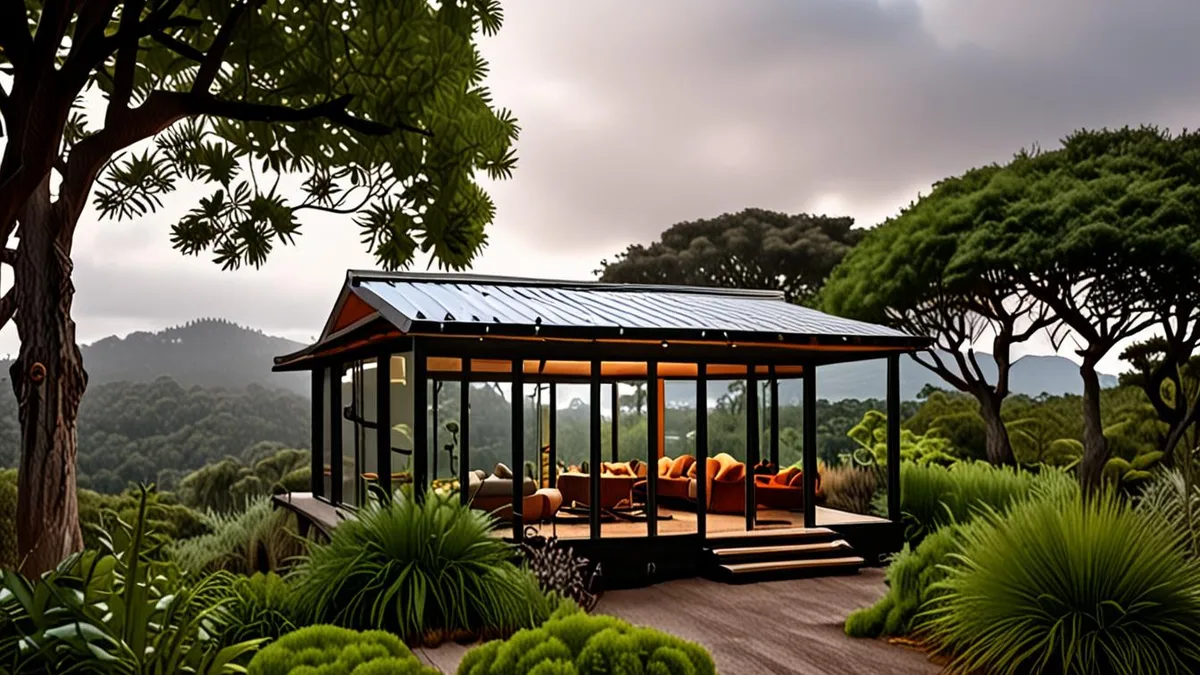
In the South Island, weather can swing from sunshine to showers in a single afternoon, especially around the mountains. That is where geodesic domes and glass-roofed cabins earn their keep. Their solid or curved structures shrug off wind and rain far better than fabric, and many feature transparent roof panels so you can watch the stars from bed, a real treat in Mackenzie Country’s dark skies.
- En-suite bathrooms: many canvas sites share communal washrooms, so confirm whether your tent has its own toilet and shower before booking, particularly if you are staying several nights.
- Reliable heating: look for wood burners, heat pumps or electric blankets rather than a single hot-water bottle, because even warm regions cool sharply after dark.
- All-weather access: ask whether the path to your unit is boardwalk or gravel, since a five-minute walk in summer rain feels very different from a muddy track.
- Stargazing features: glass roof panels or skylights let you enjoy the night sky without leaving your bed, which matters most in low-light regions.
Novelty extras like outdoor baths and hammock decks are lovely, but for a first trip prioritize the basics. A heated, en-suite stay will do far more for your experience than any Instagram-friendly feature.
What a Night Costs and How to Spot Value
Glamping in New Zealand spans a wide price range, and knowing what your money should buy helps you avoid overpaying. As a general guide, expect to pay between NZD 250 and 800 per night for two people, depending on the region, the season and the type of stay you choose.
At the lower end of that range, you are typically looking at a well-equipped canvas tent or a simple dome in a quieter area, often with shared or semi-private facilities. Mid-range rates usually buy you an en-suite bathroom, a proper bed and a private deck or outdoor seating area. The top of the range is where you find glass-roofed cabins, remote locations and full-service hosting.
What higher rates should include
Once you cross roughly NZD 600 per night, the stay should deliver more than just a bed with a view. At that level, look for extras such as a private bathroom, breakfast included, or guided activities like stargazing sessions, farm tours or kayaking. If a top-tier listing offers none of these, ask yourself what the premium is actually paying for, because a beautiful view alone rarely justifies the highest rates.
How to find better value
Timing is your best tool. Midweek stays outside the peak summer season often undercut weekend rates by 20 to 30 percent, which can turn a once-unaffordable dome into a realistic option. Traveling in spring or autumn brings milder prices alongside softer light and fewer crowds, so you lose little in experience. Compare what is included rather than the headline rate alone: a NZD 500 night with breakfast and activities can beat a NZD 450 night with neither. And remember that rates shift year to year, so treat any figure you see as a starting point and confirm current pricing with the operator directly.
Practical Logistics for Your First Trip
Glamping sites trade convenience for scenery, and that shapes your logistics more than you might expect. Most sites sit 15 to 45 minutes’ drive from the nearest town, often down rural roads with no public transport to speak of. That means a rental car or campervan is effectively essential for a first trip, and self-drive travel is the standard way visitors cover New Zealand’s glamping regions.
Book your vehicle at the same time as your accommodation, especially for summer dates when both sell out. A standard rental car handles most sites, but if your stay involves a long gravel access road, ask the operator whether a 2WD is fine or whether they recommend something more capable. Stock up on groceries in the nearest town before you arrive, because you will not want to drive back out for milk once you are settled in.
Check the guest policy before you book
Many glamping sites are adults-only or limit the number and age of children they accept, sometimes because of shared facilities, wildlife or simply the atmosphere hosts want to create. If you are traveling as a family, check each site’s policy carefully before booking rather than assuming children are welcome. Couples looking for quiet should also note that an adults-only site can be a selling point, not a restriction.
What to pack
Even in midsummer, evenings cool quickly once the sun drops, and this is especially true in Mackenzie Country, where the high country altitude makes nights noticeably colder than the coast. Pack layers you can add and remove through the day, plus a warm layer for evenings outside your unit.
Insect repellent is the other essential. Sandflies are a fact of life near rivers, lakes and bush in much of New Zealand, and they do not care how stylish your dome is. A small torch or headlamp also helps, since many sites deliberately keep lighting low to protect the night sky. Bring these basics and you will be comfortable from your first evening onward.
Your First Glamping Trip, Wrapped Up
Glamping in New Zealand takes the guesswork out of a first luxury camping trip. Match your region to your season: Mackenzie Country for dark-sky stargazing, the Bay of Islands for warmth, or Rotorua for geothermal scenery. Book 3 to 6 months ahead if you want summer dates, and budget NZD 250 to 800 per night for two people.
Then keep the choices simple. Choose a stay with reliable heating and an en-suite bathroom rather than chasing novelty features, and plan for self-drive travel, since most sites sit 15 to 45 minutes from the nearest town. Do that, and your first glamping trip should feel less like a gamble and more like the easiest good decision of your New Zealand itinerary. If this helped you plan, leave a comment or share the article with a fellow first-timer.