Picture a dome with transparent panels, snow falling outside, and your first thought is probably: that must be freezing inside. It’s a fair doubt, since a tent with windows sounds like a fridge with a view. The reality is that dome glamping in winter works very differently from a summer canvas tent, and the gap between the two is wider than most travelers expect.
Modern winter domes rely on insulated double-layer covers, proper heating and raised platforms to hold interior temperatures of 20-24°C even when it drops to -20°C outside. In this article, we break down how the geodesic structure handles snow, which heating systems keep things cozy, what a night typically costs, and how to choose a destination and pack for a cold-weather stay. By the end, that doubt about freezing in a see-through tent should be gone.
How Dome Glamping in Winter Actually Works
The reason a dome can carry a thick blanket of snow comes down to geometry. A geodesic frame distributes weight evenly across its curved surface, so snow presses down on the whole structure rather than pooling in one weak spot. A flat-roofed tent, by contrast, lets snow accumulate in the center where the fabric sags, which is exactly where failures happen. This is why dome glamping in winter is viable in regions where rectangular tents would need to be abandoned by mid-season.
Why the shape holds heat
The round form does more than shed snow. A sphere has the smallest surface area of any shape for the volume it encloses, which means less skin through which warm air can escape. A rectangular tent of the same floor space has more wall area, more corners and more seams, and each of those is a path for heat loss.
Covers matter just as much as shape. Quality winter domes use double-layer membranes with an insulating air gap trapped between them, similar in principle to a double-glazed window. That trapped layer of still air cuts heat loss dramatically compared to the single canvas used on fair-weather tents, and it is one of the main reasons a dome can stay at 20-24°C while frost forms on the outside of the panels.
Heating Systems That Keep Domes Warm
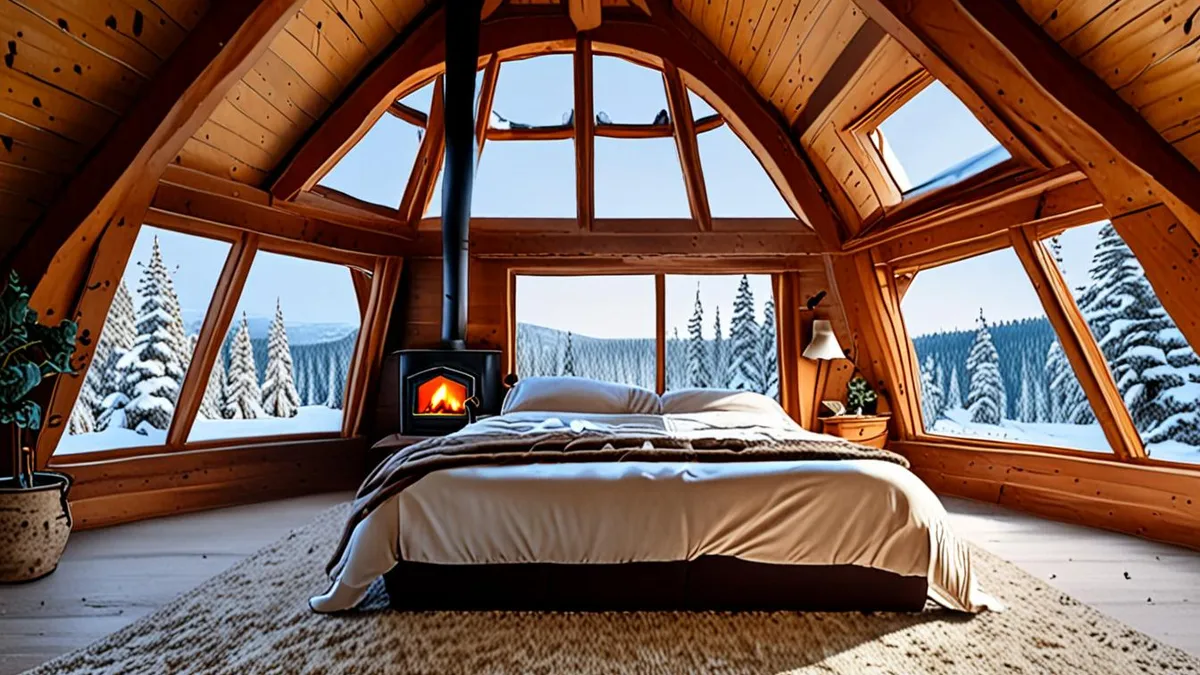
Heating is where winter domes separate themselves from ordinary tents, and operators generally pick one of three approaches. The classic choice is a small wood stove: in a typical 25-35 m² dome, one stove can bring the interior to 20-24°C within about an hour, and the crackling fire doubles as an ambient feature that no electric heater can match. You trade that atmosphere for a bit of work, though, since someone needs to feed the stove through the night.
Premium domes often skip the chimney entirely and rely on infrared panels or underfloor heating instead. These systems deliver silent, even warmth with no smoke and no refueling, and they let you set a temperature and forget about it until morning. If you prefer a stay where the heat manages itself, it is worth comparing operators on this point — how heating choices vary between glamping sites in New Zealand is a good example of what to ask about before booking.
The third option suits domes without chimney installations: thermostat-controlled electric heaters with built-in safety cutoffs. These hold a steady temperature automatically and shut off if something overheats, which makes them a low-maintenance choice for operators and guests alike.
- Wood stoves need a heat-resistant barrier and a flue that passes through a sealed, fireproof panel in the cover, so check that the stove area has a proper hearth and clear floor space around it.
- Infrared panels warm objects and people directly rather than the air, so the bed and seating area feel warm even if the air near the transparent panels stays a few degrees cooler.
- Underfloor heating takes longer to respond than a stove but keeps floors comfortably warm to walk on, which matters more than you might think on a frosty morning.
Insulation, Flooring and Snow Management
Insulation is the layer you never see but feel immediately. Well-built winter domes combine insulated PVC covers with thermal inner liners, creating a layered barrier that keeps interiors at 20-24°C even in -20°C weather. The outer cover sheds wind and moisture, the air gap between layers slows heat transfer, and the inner liner reflects warmth back into the living space. If a listing cannot tell you what the cover and liner are made of, treat that as a warning sign.
Getting off the frozen ground
What sits under the dome matters as much as what wraps it. Raised wooden platforms prevent cold from seeping up from frozen ground, and they keep the dome above drifting snow so entrances stay usable after a storm. Platforms also give operators a level base on sloped or uneven terrain, which is common in mountain and forest locations.
Snow management is an ongoing job for operators, not a one-time setup. Crews clear snow from panels and roofs regularly, both to protect the structure and to keep the view through transparent sections. Engineered covers carry snow-load ratings, and quality winter domes are commonly rated for loads of 50-75 kg per square meter, which is substantial but not infinite. When comparing operators, ask for the snow-load rating and the clearing routine; a site that answers both questions confidently is one that has genuinely prepared for winter rather than just extended its summer season.
What a Winter Dome Stay Costs and When to Book
Winter dome pricing varies widely, but most travelers should expect to pay somewhere between $150 and $400 per night. The biggest factors are location and amenities: a simple dome in a forest clearing costs far less than a panoramic unit with a private hot tub or sauna attached. Proximity to popular winter destinations also plays a role, since domes within easy reach of ski areas or aurora zones tend to sit at the higher end of the range. Check what is included in the base rate before comparing listings, since add-ons can shift the total noticeably.
Timing matters just as much. December through February is peak winter season, and weekend availability in popular regions disappears early. Operators typically open bookings well in advance, so plan ahead if you have your heart set on a specific date. Booking several months out often gives you the pick of units and sometimes an early-bird rate, while last-minute openings do appear but are unpredictable in a short season.
If your schedule allows flexibility, midweek stays are the smart traveler’s trick. January especially rewards those who can travel Tuesday through Thursday, with the same snowy landscapes and quieter surroundings, and rates that are frequently lower than weekend prices.
- Ask about heating fuel costs: some operators charge separately for firewood or electricity in winter, which can add a modest amount to a multi-night stay.
- Confirm minimum-night policies: peak-season weekends often require two or three nights rather than a single booking, so factor that into your budget.
- Watch for seasonal packages: many dome sites bundle sauna sessions, breakfast or airport transfers into winter rates, which can make a higher nightly price better value overall.
- Read the cancellation terms carefully: winter trips are more exposed to weather disruptions than summer ones, so check how far in advance you can cancel and whether deposits are refundable or transferable.
- Budget for extras beyond the nightly rate: local tourist taxes, cleaning fees and pet charges are common, and a few operators ask for a deposit against damage, so ask for the full breakdown before you pay.
- Compare against other accommodation types: if you are weighing options, our guide to glamping versus traditional camping costs breaks down what you get at each price point.
Choosing a Winter-Ready Dome Destination
Not every glamping dome is built for real winter, so choosing the right destination matters as much as choosing the right operator. A few regions have earned their reputation through years of cold-season operation.
Proven winter regions
Lapland is the classic choice, with established dome operators set up for deep snow and long nights, often with a chance of aurora views from bed. The Scottish Highlands offer a closer-to-home option for many European travelers, combining mountain scenery with operators who know how to handle wet, windy winters. Alpine regions across the continent round out the list, with domes positioned for ski access and valley views. If the Highlands appeal to you, it is worth reading up on the best times of year to go glamping in the Scottish Highlands before locking in dates.
How to spot a true four-season dome
Listings tell you a lot. A genuine winter-ready dome will state its insulation type, its heating source and often a snow-load rating in the description. If a listing goes quiet when you ask about winter specs, treat that as a signal to keep looking.
Access is the other practical question. Remote sites mean longer drives on winter roads, which may require winter tires or chains depending on the country. Before booking, check whether the operator provides transfers from a nearby town, or whether parking is available on site if you arrive by car. A stunning location loses its charm if you cannot reach it safely after a snowfall.
Packing and Preparing for a Cold-Weather Dome Night
Even a well-heated dome has its cold spots, and a little preparation makes the difference between a cozy night and a shivery one. The main thing to understand is that transparent panels, for all their stargazing appeal, cool the air right next to them. Interiors stay warm overall, but the zone near the window is noticeably cooler, which is where your clothing choices come in. Sitting close to the glass to watch the snow fall is one of the great pleasures of a dome stay, so dress for that spot rather than for the average room temperature.
Start with your feet. Floors near the window can feel cool underfoot even when the wood stove is roaring, so insulated slippers are the single most appreciated item on a winter dome packing list. Pack a pair you can slip on and off easily at the door, and bring thick socks for the evening hours when temperatures outside drop and the heating works hardest.
- Thermal base layers and wool socks: pack a dedicated set for sleeping and lounging, separate from anything you wore outside during the day, so you are never putting on damp fabric.
- A headlamp with fresh batteries: some remote domes have limited electricity after dark, and a hands-free light makes midnight trips to the bathroom or wood pile far easier.
- A power bank: with outlets scarce or switched off at night in remote setups, a charged power bank keeps phones and cameras alive through a multi-night stay.
- Moisture-wicking sleepwear: synthetic or merino sleep layers pull sweat away from your skin, which matters because warm dome air plus heavy cotton pajamas leads to that clammy, chilled feeling by morning.
- A reusable water bottle: heated dome air is drier than you expect, and having water at hand avoids repeated trips outside to a cold tap or snow bank.
Finally, message your operator before you pack. They know their site best and can tell you exactly what is provided on site, from bedding to firewood, so your bag stays light and your night stays warm. A short question sent a week or two ahead saves you from hauling gear you will never touch, and operators are usually happy to share local tips as well.
The Bottom Line on Winter Dome Comfort
So, can a transparent dome tent really be warm in winter? The answer is a clear yes. Insulated double-layer covers, a wood stove or infrared heating, and a raised wooden platform work together to keep dome glamping in winter at a steady 20-24°C, even when temperatures outside drop to -20°C. The same round shape that gives you panoramic snow views is also surprisingly efficient at holding heat.
Plan for a budget of roughly $150-400 per night, and book 2-3 months ahead if you want a December-February weekend in a popular region. Most importantly, choose operators that publish their insulation type, heating source and snow-load specs, since those details are the best guarantee of a genuinely warm stay. Have you tried a winter dome night yet? Share your experience or questions in the comments, or pass this article along to a fellow traveler.