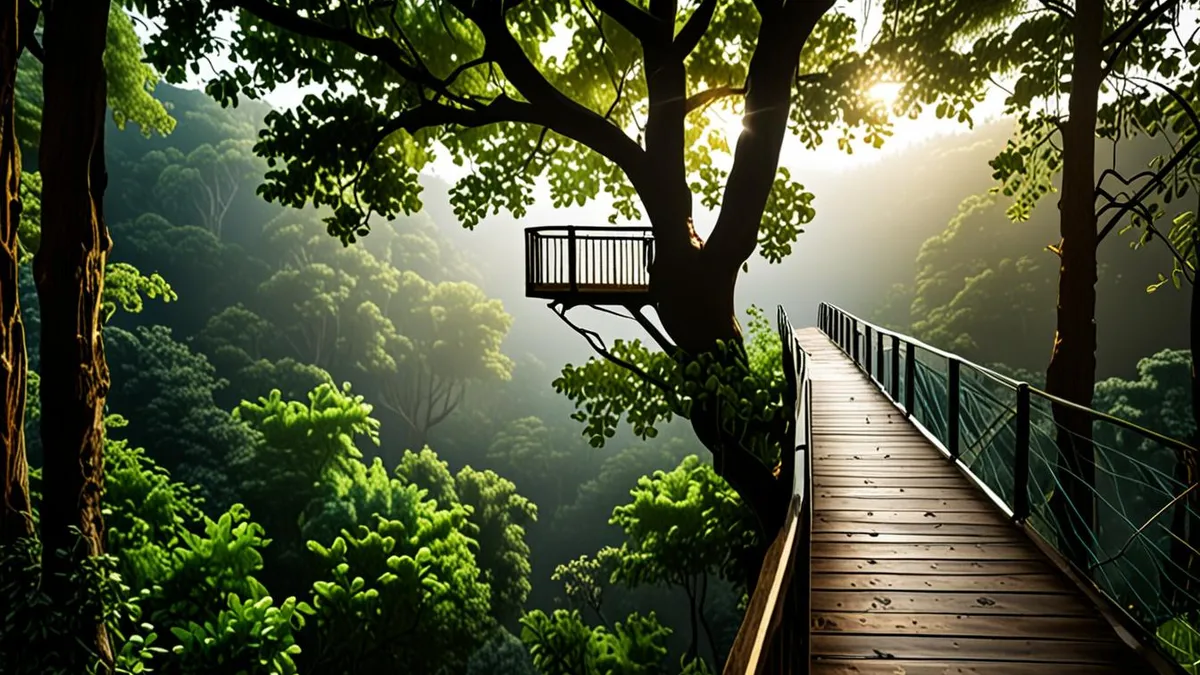
Treehouse stays look magical in photos: a cabin wrapped in leaves, morning mist below your feet, birds at eye level. But first-timers are often surprised by the reality on arrival — a steep staircase instead of an elevator, a composting toilet down the path, and power limited to a reading light and a USB port. The gap between the Instagram version and the actual experience can be significant, so it pays to know what you are booking before you pay.
This guide walks you through what treehouse stays are really like in terms of comfort, power and facilities, how their prices compare to regular hotels, and who they suit best — including families and travelers with mobility concerns. You will also find practical advice on when and how far ahead to reserve, what to pack for each season, and how to fit a night in the trees into a longer trip. By the end, you will be able to choose a treehouse that matches your expectations instead of hoping for the best.
What Treehouse Stays Are Really Like: Comfort, Power and Facilities
The first thing to understand is that a treehouse stay is less a hotel room and more a private elevated cabin. Most units sit somewhere between 3 and 10 meters above the ground, supported by a tree, poles or a combination of both. Inside, you typically get a proper bed, basic furniture and large windows or even open fronts that look straight into the canopy. It is the view, not the furniture count, that you are paying for.
Power and facilities: manage your expectations
Power in most treehouses is deliberately limited. You can usually count on lighting and USB charging for phones, but hairdryers, kettles and other high-draw appliances are often not supported by the electrical system. If you need to dry your hair or boil water for tea, check with the host first or plan to use the main lodge facilities instead.
Bathrooms are the other common surprise. Many units have no en-suite bathroom at all, and shared facilities are typically 20 to 100 meters away along an outdoor path. If an en-suite matters to you — and for many travelers it does — confirm it explicitly before booking rather than assuming.
Temperature and noise up in the trees
Most treehouses are uninsulated or lightly insulated, which means the inside temperature follows the seasons closely. Shoulder-season nights can drop below 10°C inside, so ask the host about heating options or extra blankets before you arrive. As for sound, forget hotel silence: expect birdsong at dawn, creaking wood in the wind and the general hum of the forest. Most guests find it charming, but light sleepers should come prepared with earplugs just in case.
How Treehouse Stays Compare on Price and Value
Treehouse stays are not a budget option, but they are also not uniformly expensive. Typical nightly rates run from about $120 to $450, while designer canopy suites — the ones with floor-to-ceiling glass, outdoor baths and architect credentials — can exceed $600. What you get for that money differs from a hotel in an important way: rates usually include the setting and the privacy, not the service layer. Daily housekeeping, room service and concierge desks are rare, so think of the price as paying for the experience rather than the amenities.
Small extras also add up faster than you might expect. Breakfast may be charged separately, and on-site parking or firewood can carry small fees that a hotel would quietly absorb. Ask the host for a full breakdown of what is included so the final bill holds no surprises.
- Breakfast baskets: some hosts deliver a hamper to your deck each morning for an added per-person cost, which is often cheaper than driving to the nearest café but only if you would eat there anyway.
- Firewood charges: if your treehouse has a stove or fire pit, the first basket of firewood is sometimes included and additional bundles are sold on-site — relevant in cooler months.
- Minimum-stay rules: weekend nights at popular properties often come with a two-night minimum, which effectively raises the cost of a short getaway even when the per-night rate looks reasonable.
Value peaks when you actually use what a treehouse offers that hotels cannot: a private terrace in the treetops, wildlife at eye level and genuine seclusion. If you plan to sit out on the deck at dusk with a drink and listen for owls, the nightly rate starts to look like a bargain compared to a standard room with a window view.
Access, Safety and Who Treehouse Stays Suit
Getting up into your room is the first practical question, and it is worth taking seriously. Most modern builds use solid stairs or a spiral staircase rather than the rope ladders of childhood imagination, but that still means a sustained climb with your luggage. If you have dodgy knees, you are pregnant, or you are traveling with small children who negotiate stairs slowly, confirm the exact access arrangement with the host before booking. True ladder-only units are now a minority but still exist, and they are not for everyone.
Safety and families
Railings and gated decks are standard at established operators, but standards vary, so ask directly about child-proofing if you are bringing kids — especially toddlers who treat every railing as a climbing frame. It is also important to know that many adult-oriented treehouse resorts set a minimum guest age of 12+, which means families cannot simply book any unit they like. Look specifically for family-designated units; standard builds usually sleep 2 to 4 guests, and only some family models take 5 or 6, so check capacity as well as age policy.
Travelers with limited mobility
Guests with limited mobility should not rely on listing photos to judge accessibility. Request ground-level or low-rise options directly with the operator before booking, and ask about the path from parking to the unit as well — a ground-floor cabin reached by a gravel slope can still be a challenge. A short message before you pay will tell you far more than a website ever will, and reputable hosts answer these questions gladly.
Booking Timeline: When and How Far Ahead to Reserve a Treehouse
Treehouses sell out differently from hotels. Because most operators run only a handful of units, a single busy weekend can leave a whole property fully booked, and there is rarely another room down the hall to fall back on. If the two or three cabins at a small forest property are taken, your only option is a different date or a different destination entirely. Planning your reservation around that reality makes the difference between getting the cabin you actually want and settling for whatever is left. It also matters because treehouse hosts are often individuals or small families, not large reservation teams, so availability can change without appearing instantly on booking platforms.
- Book peak summer weekends early. For Friday and Saturday nights between June and August, aim to reserve 2–4 months ahead. The most photographed canopy suites — the ones with wraparound terraces and floor-to-ceiling windows — often need 6+ months of lead time, especially in small properties with only two or three units.
- Use shoulder season for spontaneity. Weekday stays in late spring or early autumn are the easiest to arrange at short notice, often just 2–3 weeks out. If your dates are flexible, this is where you will find both availability and quieter surroundings.
- Study the cancellation terms line by line. Small family-run operators frequently have stricter cancellation windows than hotel chains, sometimes with little or no refund close to the arrival date. Note the deadline in your calendar before you pay.
- Confirm the details in writing. Before booking, message the host and get written confirmation of en-suite facilities, heating, and exact access arrangements. A short message now prevents a long disappointment later.
Treehouse bookings reward a little extra patience. The units are few, the demand is steady, and the hosts are often individuals rather than reservation desks — so the earlier and more clearly you communicate, the smoother the whole stay becomes. Treat the reservation process as part of the experience: a quick phone call or message exchange usually gives you a better sense of the property than any listing photo, and hosts who answer promptly and thoroughly tend to run stays that match their descriptions.
Choosing the Right Treehouse Stay for Your Season and Packing
Timing matters more in a treehouse than in a standard hotel room, because most units are lightly insulated and open to the air around them. In most temperate regions, late spring to early autumn is the sweet spot: warm days, dry decks and long evenings in the canopy. Once nights turn chilly, uninsulated units can drop below 10°C inside, which turns a romantic stay into a shivering one unless heating is provided.
Rain is the other factor to plan around. An exposed canopy deck is a wonderful place to watch the forest — and a miserable one in a downpour. Check the local rainfall pattern for your dates, and if you cannot avoid the wettest months, look for units with a covered terrace or a sheltered veranda so you can still sit outside.
Packing also works differently here. Since paths to shared bathrooms are outdoor and unlit after dark, what you bring matters more than how much. For a full, practical rundown, this glamping packing checklist covers the essentials in detail, but the treehouse-specific basics are:
- Layers for day and night. Temperatures swing more in the canopy than at ground level, so pack a warm midlayer and socks even for summer stays, when evenings cool quickly among the trees.
- A headlamp, not just a phone light. Outdoor walkways to bathroom blocks are typically unlit, and a headlamp keeps both hands free for stair railings and hatches after dark.
- Slippers or thick socks. Many hosts ask for shoes off inside, and wooden floors get cold at night — slippers make late-night trips far more comfortable.
- A soft, small bag. Spiral staircases and entry hatches make hard suitcases genuinely awkward to maneuver; a duffel or backpack that you can carry up one-handed saves real frustration.
Get the season and the bag right, and the rest of the stay takes care of itself. The whole point of a treehouse is waking up in the canopy feeling rested, not wrestling a suitcase up a staircase at midnight.
Where Treehouse Stays Fit in a Wider Trip
Treehouse stays rarely stand alone in the middle of a city. They cluster in forested valleys, lake districts and national-park fringes, which means most are 30–90 minutes from the nearest airport. Plan on a rental car for flexibility, or check in advance whether the operator offers a shuttle or pickup — a few do, but you should confirm it before booking rather than assume.
How many nights do you actually need?
One or two nights is usually enough to enjoy the novelty fully: one sunset on the terrace, one night listening to the wind in the branches, one slow morning with birds at eye level. Beyond that, the limited power and lack of hotel services start to bite. For a longer trip, pair the treehouse with a conventional hotel or cabin stay — the contrast actually makes both halves more enjoyable.
Build the trip around the treehouse
The smartest itineraries treat the treehouse as a base rather than a pit stop. Choose a location with hiking trails, a lake for canoeing or genuinely dark skies for stargazing within easy reach, and plan your days locally instead of committing to daily long drives. You will spend more time in the canopy and less time behind the wheel — which is exactly what you came for.
Wrapping Up: Picking Your Treehouse Stay with Confidence
Treehouse stays look magical in photos, but the reality for first-timers often includes limited power, occasional shared bathrooms and nights that follow the outdoor temperature. The good news is that none of these are dealbreakers once you know about them in advance. For roughly $120–$450 a night, you get canopy views, genuine privacy and a setting no standard hotel room can match — with the caveat that power is often limited to lighting and USB charging, and some units share facilities rather than offering an en-suite.
The right choice comes down to checking access, facilities, heating and season fit before you pay. Book 2–4 months ahead for popular dates, message the host to confirm the details that matter to you in writing, and the novelty becomes a genuinely comfortable escape rather than a surprise. Have you stayed in a treehouse yet, or are you planning your first one? Share your experience or questions in the comments below.