Glamping prices can look baffling at first glance. You’ll find canvas tents listed at $100 a night and luxury domes at $1,000 or more, sometimes within the same region. The glamping cost you pay depends on a handful of factors that aren’t always obvious from a listing photo, and understanding them makes it much easier to tell whether a rate is fair or inflated.
This guide breaks down what you can expect to pay per night, why a geodesic dome costs more than a bell tent, and how season and location move prices up or down. We’ll also show you how to read what’s actually included in a rate, share practical ways to stretch your budget, and wrap up with a clear summary of where the best value usually sits. By the end, you’ll be able to compare sites like a pro.
What Glamping Costs Per Night: The Typical Price Ranges
Most glamping rates fall into three broad tiers, and knowing where a site sits on that ladder tells you a lot before you even read the description. At the budget end, simple tent and cabin sites generally charge $100–$200 per night for two guests. These are often canvas tents on platforms or rustic cabins on small campgrounds, where you trade private facilities for an affordable price.
The mid-range and luxury tiers
The middle of the market is where glamping gets comfortable. Safari tents, yurts and geodesic domes usually fall between $200 and $400 per night, and at this level you can typically expect real beds, proper heating and often a private bathroom. This is the tier most first-time glampers end up booking, because it balances comfort and cost.
At the top, luxury lodges with full service, private bathrooms and curated experiences often exceed $500–$1,000 per night. These properties usually include meals, staff on site and activities, so the rate works more like a small all-inclusive hotel than a campsite.
One detail to watch: most published rates are for two people. Extra guests commonly add $20–$50 per night, so a family of four should budget accordingly before comparing sites.
Accommodation Type: Why a Dome Costs More Than a Bell Tent
The single biggest factor in what you’ll pay is the structure itself. A canvas bell tent pitched in a field and a heated dome with a glass ceiling can sit on the same property, yet cost several times apart. The reason comes down to what the operator invested in the unit and what you actually get inside it.
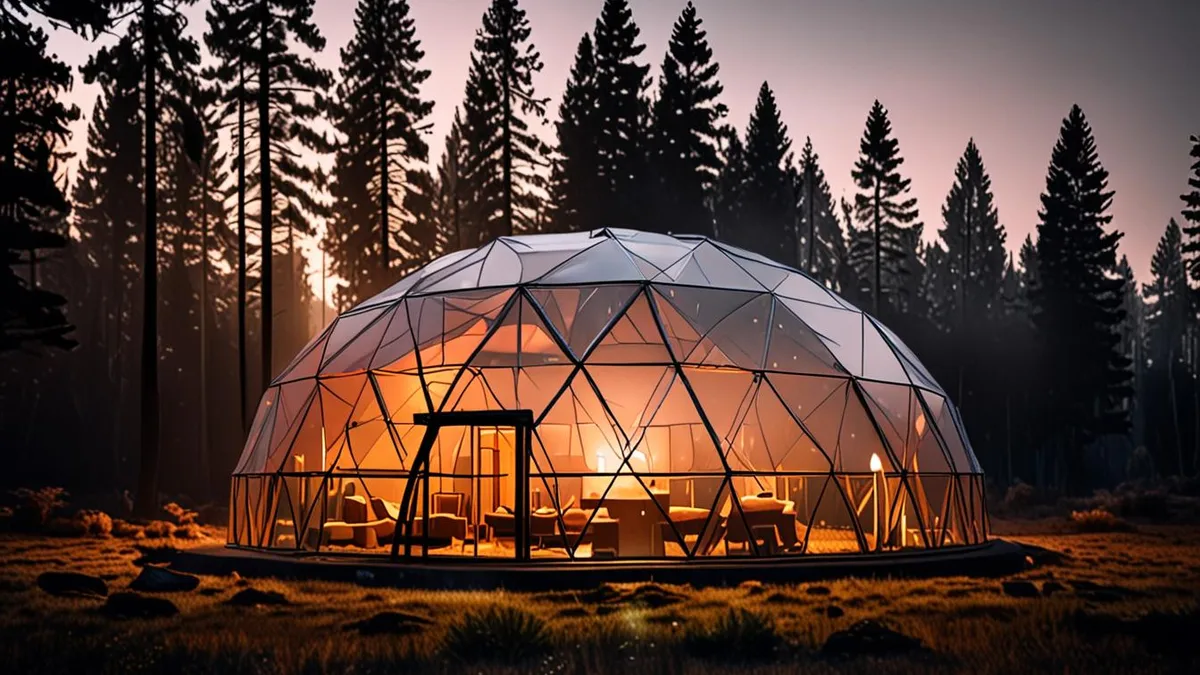
Canvas bell tents and basic cabins sit at the bottom of the price ladder, largely because they share bathroom blocks with other guests. There’s no plumbing running to your tent, no kitchen, and often minimal insulation. Safari tents and yurts with en-suite bathrooms and small kitchens command noticeably higher rates, since they need water, power and waste connections. Geodesic domes with panoramic windows, hot tubs and proper heating sit at the premium end, and the most elaborate units can push well past the price of a standard hotel room.
If you’re weighing which structure suits your trip, our guide on how to pick between a safari tent, dome or yurt walks through the practical differences.
Three features drive most of the price gap between units on the same site:
- Size and floor space: a large dome with a separate sleeping and living area holds more furniture, needs a bigger platform and commands a higher nightly rate than a single-room bell tent.
- Insulation and climate control: units with insulated liners, wood stoves or air conditioning cost more to build and run, and that shows up in the rate, especially at sites that operate in cooler months.
- Private facilities: an en-suite bathroom is often the single most expensive line item to install on a glamping site, which is why units with their own toilet and shower sit in a higher tier than those relying on a shared block.
Season and Timing: When Glamping Cost Peaks and Dips
Two identical tents at the same site can differ in price by half depending on when you book. Glamping operators price like hotels: rates rise when demand rises and drop when it doesn’t, and the swings are sharper than in the hotel world because most sites have only a handful of units to fill.
Peak versus shoulder season
Peak summer months of June–August can raise rates 30–50% over shoulder season, especially at family-friendly sites where school holidays drive bookings. Shoulder months like May, September and early October often cut prices 20–40% at the same site, with milder crowds as a bonus. If your dates are flexible, choosing where in the season you travel matters as much as choosing the destination — our guide to the best seasons for glamping in the Scottish Highlands shows how much this varies by region.
Weekends and booking windows
Within any given week, weekend nights typically cost 20–30% more than midweek nights. A Thursday-to-Monday stay can therefore cost noticeably more than the same number of nights from Monday to Friday.
Timing your booking matters too. For summer trips, booking 3–6 months ahead locks in the best units and rates, because the cheapest and most popular units tend to sell out first. Last-minute deals do exist, but they’re not something to count on for a specific dome or safari tent in July.
Location and Destination: How Place Changes the Price Tag
Where you book matters just as much as what you sleep in. The same safari tent that costs mid-range money in one region can sit at the top of the price ladder somewhere else, and the reason usually comes down to geography rather than comfort.
Short seasons and remote sites push rates up
Destinations with a short operating window, like the Scottish Highlands, often charge more per night because operators have to earn a full year’s revenue in just a few months of viable weather. A site that can only open for part of the year needs higher nightly rates to cover mortgages, staff and maintenance through the closed months.
Remoteness adds its own premium. A site deep in the countryside may need to truck in water, run generators or solar systems for power, and transport staff and supplies over long distances. Those logistics cost real money, and they show up in the rate you pay.
Then there’s the location premium pure and simple. Sites within easy reach of major cities or famous scenery, national parks, coastlines, well-known hiking regions, can charge noticeably more for an identical tent than a site an hour further away. You’re partly paying for the view and the drive time you save.
Where the better value tends to be
Long-season destinations with plenty of competing sites often deliver better value per night. When operators can host guests most of the year and rivalry keeps rates honest, you get more tent for your money. New Zealand is a good example: with a mix of established sites and a long tourism season, it rewards comparison shopping. If you’re considering it, this guide to glamping in New Zealand for first-timers is a helpful starting point.
The practical takeaway: before judging a rate as expensive, ask what the location costs the operator. A high nightly price in the Highlands or on a remote island often reflects a short season and expensive logistics, not just a fancy tent.
What’s Included: Reading the Rate Before You Compare
A headline nightly rate tells you very little until you know what comes with it. Two sites charging the same amount can deliver very different stays if one includes bedding, towels and heating while the other bills them as extras. Before booking, scroll past the photos and read the inclusions list carefully, and check how heating works in cooler months, since a wood-burning stove with free firewood is worth more than an electric heater billed per use.
Extras are where budgets quietly balloon. Meals, airport transfers and guided activities are often sold as add-ons rather than included in the rate, and these typically add $50–$300 per stay depending on what you choose. Romantic upgrades follow the same pattern, so a “cheap” dome with a paid hot tub can end up costing more than a pricier site where the hot tub comes free.
- Firewood packages: some sites include a starter bundle only, then charge per additional crate, which adds up on multi-night stays in cooler weather.
- Wood-fired saunas: often bookable as a private session for an extra fee, sometimes requiring advance reservation so the site can staff it.
- Breakfast baskets or chef dinners: frequently priced per person rather than per stay, so the cost doubles for couples.
- Cleaning or linen fees: a few sites add a separate turnover charge per stay, which doesn’t appear in the nightly rate at all.
The fix is simple: always compare the total stay cost, not the headline nightly rate. Add up the base rate for all nights, then every extra you actually want, and only then compare sites side by side.
How to Get More Value From Your Glamping Budget
Glamping doesn’t have to be a splurge, and you don’t need to downgrade to a basic bell tent to save money. Most of the savings come from when and how you book, not from settling for a lesser site. The same safari tent or dome can vary dramatically in price depending on your dates, so a little planning goes a long way. Work through these steps in order and you’ll typically pay noticeably less for the exact unit you would have booked at full price anyway.
- Shift to shoulder season. Moving your trip to May, September or early October often cuts prices at the very same site, and you get quieter grounds, softer light and easier booking as a bonus.
- Book midweek. Friday and Saturday nights carry a premium at most sites, so a Monday-to-Thursday stay lets you skip the surcharge on every night of your trip.
- Reserve 3–6 months ahead for summer trips. The cheapest and best-equipped units sell out first for June–August dates, so early booking is what locks in the good rates rather than last-minute hunting.
- Pick a site with inclusions built in. A slightly higher base rate that covers breakfast, kayaks or bikes usually beats a cheaper site where every meal and activity is a paid extra, because add-ons typically run $50–$300 per stay.
Stack these moves and the savings compound. A shoulder-season midweek stay booked early can easily cost half of what the identical unit goes for on a peak summer weekend. Check whether bedding, towels and heating are included before you compare rates, since a bargain headline price can shrink once extras are added on. Then spend what you save on one good guided experience or a private hot tub night, and you’ll get more out of the trip than a pricier booking would have given you.
The Bottom Line on Glamping Prices
So why do glamping prices range from $100 to over $1,000 a night? The spread comes down to four things: the type of accommodation, the season, the location, and what the rate actually includes. A canvas tent at a budget site typically runs $100–$200 per night for two people, mid-range safari tents, yurts and domes usually cost $200–$400, and luxury lodges and premium domes often exceed $500–$1,000.
Once you know what drives the price, you can target the best value. Shoulder-season midweek dates booked 3–6 months ahead tend to deliver the lowest rate for the same unit you would pay a premium for in summer. Compare total stay costs rather than headline nightly rates, and the numbers become much easier to weigh against each other. If this helped you budget your trip, leave a comment or share the article with a fellow traveler.