A night under the Sahara stars is on many travelers’ bucket lists, but planning glamping in Morocco’s desert raises questions fast: Which desert should you choose? Which season won’t melt or freeze you? And is that dreamy camp photo a luxury tent or a basic one? With several deserts, a wide range of camps and real seasonal swings, picking wrong can turn a dream night into a rough one.
This guide walks you through the decisions that matter. We’ll compare the three main desert areas — Merzouga, Zagora and Agafay — look at when to go and what temperatures to expect, break down camp styles and prices, and cover transport, booking windows and what to pack. You’ll also learn why a desert camp stay works differently from other glamping trips, so you can book with confidence and enjoy those stars.
Why Glamping in Morocco’s Desert Is Different From Other Glamping Trips
Glamping in Morocco’s desert is nothing like rolling up to a glamping site in a national park and stepping out of your car. The best camps sit deep inside remote dune fields such as Erg Chebbi or Erg Chigaga, far from any paved road. You can’t drive to the door. Instead, you’ll transfer to a 4×4 vehicle or set off by camel for the final stretch, typically a 30-90 minute ride from where the road ends. That remoteness is the whole point, but it changes how you plan, pack and book.
The night is the main event
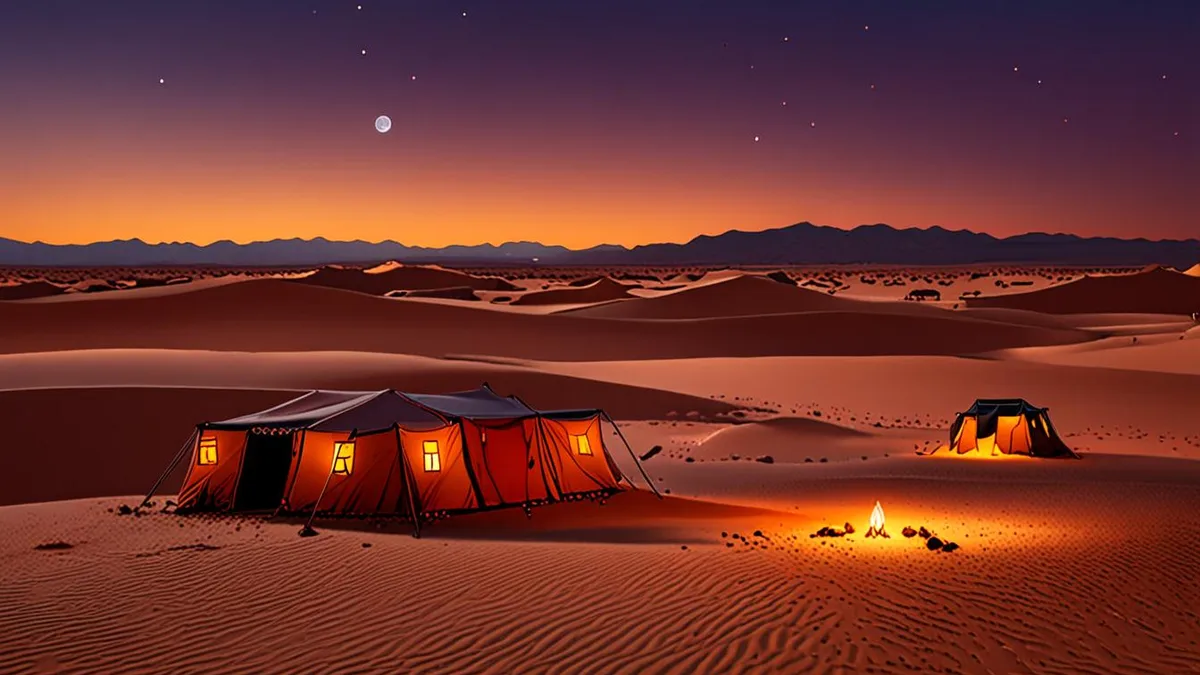
Daytime is for dunes and camels, but the hours after sunset are what you’ll remember. With no towns nearby, the sky turns pitch black and the stars come out in a way most travelers have never seen. Camps gather everyone around a fire, often with staff playing drums and singing Berber songs. Just be ready for the swing: the same evening that felt warm at dinner can turn genuinely cold by bedtime, so the temperature drop is real and fast.
Comfort levels vary enormously
“Desert camp” covers everything from basic berber tents pitched close together with shared bathroom facilities, to luxury suites with proper beds and en-suite bathrooms. Two camps twenty minutes apart can offer completely different experiences, so look closely at what you’re actually booking rather than trusting the word “camp” on its own.
Choosing Your Desert: Merzouga, Zagora or Agafay
Morocco has more than one desert, and the differences between them shape your whole trip. The three most popular options each suit a different kind of traveler, and picking the wrong one for your itinerary is the most common planning mistake.
Merzouga, sitting beside the Erg Chebbi dune field, is the classic postcard choice. The dunes here are the tallest and most photogenic in the country, rising in sculpted ridges that glow orange at sunrise and sunset. The trade-off is the journey: it’s roughly 9 hours by car from Marrakech, so most visitors arrive as part of a longer loop rather than a quick trip. Zagora, at about 7 hours from Marrakech, is greener and closer, with smaller dunes that work well for shorter itineraries. If you’re weighing desert camping against other first-time glamping destinations, the trade-offs here are similar to choosing between regions elsewhere, as explained in this guide to glamping in New Zealand for first-timers.
- Agafay: A stone desert under an hour from Marrakech, with no sand dunes but plenty of luxury camps. It’s the easiest option if you only have one night free in the city.
- Zagora: The greener, more accessible choice, often paired with the Draa Valley’s palm groves on the drive down, making the journey itself part of the experience.
- Merzouga: Worth the long drive if towering dunes are your priority, since Erg Chebbi’s scale is what makes the camel trek and sunrise climb so memorable.
So how do you actually choose? Start with your schedule. If you’re tight on time and based in Marrakech, Agafay gives you a desert night without a full travel day. If you have room in your itinerary for a longer loop, the drive south to Zagora becomes part of the experience rather than an obstacle.
If towering dunes are the whole reason you’re coming, Merzouga is hard to beat. Erg Chebbi’s scale is what makes the camel trek and the sunrise climb so memorable, and the photos justify the long haul. Just remember that the journey eats up a full day each way, so it works best folded into a multi-day route rather than treated as a standalone excursion.
One practical note applies to all three: whichever desert you pick, the camp itself is usually reached by a 4×4 transfer or camel trek from the nearest road, so confirm the logistics with your operator before you commit. And once you’ve settled on a region, check what your chosen camp actually includes, since comfort levels vary widely from one site to the next.
When to Go: Seasons and Temperatures
Timing makes or breaks a desert trip. The Sahara is a place of extremes, and the difference between a magical night and a miserable one often comes down to the month you pick.
The reliable window is October to April. Within that stretch, November and March hit the sweet spot: days are warm enough for dune walks and camel rides, while nights are cold but manageable rather than punishing. These two months balance the conditions better than any others, which is also why camps fill up fastest then.
Why summer is a non-starter
From late spring through early autumn, daytime temperatures in the desert regularly exceed 40°C. Walking to the bathroom becomes an expedition, and sleeping is nearly impossible without serious cooling. Most quality camps simply close for the season or run a reduced service, so even if you find availability, you may not get the experience you paid for.
Winter nights are colder than you expect
Even in the heart of high season, desert nights drop to around 5-10°C while days sit at a comfortable 20-30°C. That swing catches travelers off guard every year. Pack warm layers, thick socks and something to sleep in beyond a t-shirt, because canvas walls keep out the wind but not the chill. A cold night under brilliant stars is still wonderful, as long as you dressed for it.
What Kind of Camp to Book
Desert camps in Morocco come in two broad flavors, and the difference between them matters more than any photo gallery will tell you. Standard camps use traditional berber tents with rugs, low mattresses and shared bathroom blocks, and they typically run around $80-150 per person per night, usually including dinner and breakfast. Luxury camps offer proper beds, en-suite bathrooms, and at some sites even a small pool, with rates from $200-400+ per night.
Neither option is better by default. A well-run standard camp can be more atmospheric than a slick luxury one, especially if you care more about the fire and the drumming than about thread counts. The real question is what “comfort” means to you after a day in the sand.
Before booking, look past the hero shots and compare the practical details. Camps are small, so a few tents make a big difference to how quiet or crowded your night feels. It also helps to read a guide on how to choose between safari tents, domes and yurts, since Moroccan camps use several of these styles and they behave very differently in wind and heat.
- Tent style: Traditional berber tents have canvas walls and shared spaces, while some luxury camps use large safari-style tents or geodesic domes with real doors and windows that seal out sand better.
- Bathroom setup: Ask whether bathrooms are in a separate block a short walk away or attached to your tent, and whether hot water is available in the evening rather than just the morning.
- Group size: Camps range from a handful of tents to several dozen; smaller camps feel more intimate but book out faster, while larger ones often have more reliable service and entertainment.
- Inclusions: Check whether dinner, breakfast, the camel trek at sunset and the 4×4 transfer are bundled into the rate or charged separately, as this can swing the real price significantly.
How to Get There and How Far to Book Ahead
The desert camps are genuinely remote, which is part of the appeal and also the main logistical challenge. You cannot simply drive up to your tent, so a little planning goes a long way. Here is how the journey typically works, step by step, so you know exactly what to expect before you commit to a booking.
- Pick your route and base town. Merzouga, gateway to the Erg Chebbi dunes, sits a full day’s drive from Marrakech, while Zagora is closer at around 7 hours. Most visitors don’t attempt this as a day trip but fold it into a 3-5 day loop that also takes in the Atlas Mountains, the Todra Gorge or kasbahs along the way. Build in extra time for photo stops and long mountain passes.
- Decide how you’ll travel the loop. Options range from a private car with driver, which gives you flexibility over stops and timing, to a shared group tour, which costs less but follows a fixed schedule. Check what your operator includes before committing, and ask whether the desert camp itself is booked or chosen on arrival.
- Plan the final approach. No camp sits by the road. The last leg is a 4×4 transfer or a camel trek of 30-90 minutes from the nearest paved road, often timed to arrive for sunset on the dunes. Pack light for this stretch, since everything you bring rides on the vehicle or the camel with you.
- Book well ahead. For the October to April high season, reserve 2-3 months in advance. For Christmas and Easter weeks, when demand spikes, aim for 4-6 months ahead to get your pick of camps and tent types.
One practical tip: confirm pickup times and the transfer arrangement directly with the camp when you book. Mobile signal fades as you approach the dunes, and you want a driver who knows exactly where to drop you. If your tour operator handles the whole loop, make sure the camp name and the transfer are written into your confirmation. Ask for a contact number for the camp manager too, in case plans change on the road.
What to Pack for a Desert Night
Packing for a desert night is an exercise in contrast. Days in the winter months are pleasantly warm, often 20-30°C, but once the sun drops the temperature can fall to 5-10°C, and canvas tents do little to hold in heat. The trick is layers you can add and shed easily, plus a windproof jacket for the exposed dune tops, where the evening breeze is the coldest part of the day.
Sand is the other constant. It gets into everything, it whips across the dunes on windy afternoons, and it reflects sunlight hard enough to catch unprepared skin. Closed shoes beat sandals for climbing dunes, and a scarf or shemagh does double duty against both sun and blowing sand. For a fuller rundown, our practical glamping packing checklist covers the basics that apply to any camp trip.
Finally, think about the practical realities of life under canvas. Tent walls are thin, nights are pitch dark away from any town, and electricity is limited at many camps.
- Headlamp: Paths between tents and the bathroom block are unlit, and a headlamp keeps your hands free for dinner trays or camera gear.
- Power bank: Sockets in tents are rare or shared, so a charged power bank keeps your phone alive for photos and morning alarms.
- Modest sleepwear: Canvas walls carry sound and offer little insulation, so warm, modest sleepwear keeps you comfortable and respectful in close quarters.
- High-SPF sunscreen and lip balm: Apply before the sunset camel trek, since low-angle sun on reflective sand burns faster than most visitors expect.
- Scarf or shemagh: A loose weave works best; ask camp staff to show you the local way of wrapping it against wind and sand.
The Takeaway
A night under Sahara stars is absolutely doable, and the planning is simpler than it looks if you follow one order of decisions. Pick your desert first, then match the season, then choose a camp style within your budget. October to April is the reliable window, a 2-3 month booking lead covers most trips (4-6 months for Christmas and Easter weeks), and nightly rates typically run from $80 at a standard camp to $400 and up at a luxury one.
Keep expectations realistic: most camps sit 30-90 minutes from the nearest road by 4×4 or camel, and one or two nights is enough to get the full dune-and-stars experience. Choose the desert that fits your route and schedule, pack for cold nights, and the Sahara will do the rest. If you’ve slept under the Moroccan stars, share your experience in the comments or pass this article along to a fellow traveler.