Every family resort brochure looks impressive: rooftop bars, championship golf courses, award-winning spas. Then you arrive with two kids under eight, and you realize you’ll use almost none of it. You’re paying for amenities that sound great in the listing but do nothing for your actual holiday, while the things that matter — a decent pool, a room that fits everyone — turn out to be an afterthought.
This article cuts through the marketing and focuses on the amenities that genuinely decide whether a family holiday works. We’ll look at why the amenity list misleads families, what to check in the pools and water features, how to find rooms that actually fit four people, what kids’ clubs really cover by age, how to judge food and all-inclusive value, and a smart timing and booking strategy. By the end, you’ll know exactly how to choose a family resort based on what your kids will do for seven days, not on the brochure’s headline perks.
Why the Amenity List Misleads Families
Open any resort website and you’ll see the same headline amenities: a full-service spa, an 18-hole golf course, a rooftop cocktail bar with sunset views. These features sound luxurious, and they help justify premium nightly rates. But think honestly about your last family trip. Did you book a massage with a toddler in tow? Did anyone on your trip play nine holes while the kids waited? For most families with young children, the answer is no — yet those amenities are baked into the price you pay every night.
What actually decides whether the week works
Strip the brochure down to what your family will genuinely use, and four things remain: the pool setup, the room layout, the food, and childcare. If the pool keeps your kids happy for hours, the room lets everyone actually sleep, meals are manageable without a meltdown, and the kids’ club gives you a few reliable hours to yourself, the holiday works. Everything else is decoration.
This is why judging a resort by its headline perks is a mistake. A resort with a modest spa but a brilliant shallow kids’ pool and true connecting rooms will serve your family far better than a glossy five-star property where the children’s facilities were clearly an afterthought. A simple test: imagine seven days at the resort and count the hours your kids will be happily occupied. If that number looks thin, no amount of rooftop bars will save the trip. Judge the resort by your kids’ week, not the brochure’s cover.
Pools and Water Features: The Amenity Kids Use Most
If you’re going to spend money on one amenity, make it the pool — it’s where kids spend most of their waking hours at a resort. But not all pools work for families, and the difference comes down to design details that never make it into the photos. The key thing to look for is a separate shallow kids’ pool, roughly 30-60 cm deep, built specifically for toddlers and young swimmers. A shallow end tacked onto the main pool is not the same thing: the slope means small children wander from ankle-deep water into deeper sections in a few steps, and you can’t relax for a second.
Water slides and splash zones are the second-biggest win. For kids roughly aged 4-12, a good slide or splash area can occupy them for hours, day after day, at no extra cost. That’s hours of entertainment you don’t have to organize, book, or pay for — arguably the best value amenity a family resort offers.
Then there are the practical details that vary wildly between resorts, even at the same star level. Before booking, check the following:
- Towel service: some resorts provide fresh pool towels free every day, while others charge a deposit or expect you to bring your own — a real hassle when packing for kids.
- Lifeguard coverage: find out whether lifeguards are on duty and during which hours, since this changes how closely you need to supervise and whether evening swims are possible.
- Shade: look for umbrellas, pergolas or shaded shallow areas, because a pool with no shade becomes unusable during midday sun, especially with babies and toddlers.
- Heating: in cooler destinations, an unheated pool can sit unused even in shoulder season, so check if the kids’ pool is heated if you’re traveling outside high summer.
It also helps to see how a destination shapes the pool setup before you book — this guide to choosing the best area for a resort holiday in the Azores is a good example of matching resort facilities to the kind of trip you want.
Rooms and Layouts That Fit a Family
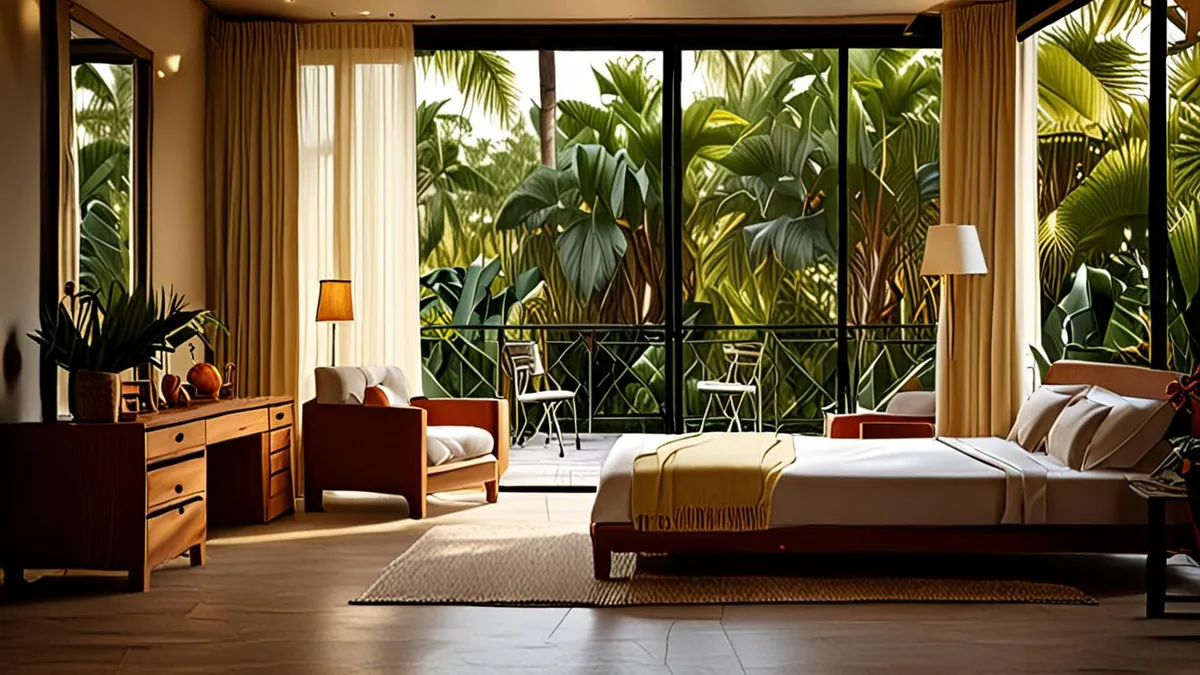
Here’s the booking mistake almost every family makes at least once: reserving a standard double room and assuming four people can squeeze in. Most standard doubles legally and practically sleep two adults, sometimes with space for one small child. Arrive as a family of four and you’ll either face extra-bed fees, an uncomfortable floor mattress, or a front-desk scramble on arrival. The fix is simple: filter specifically for family suites or connecting rooms from the start, and treat anything else as a compromise you’re choosing deliberately.
What the extra space costs
Family accommodation comes at a premium. Expect family suites or connecting rooms to cost 30-50% more than a standard double at the same resort. That sounds steep, but it’s worth putting in context: it buys everyone actually sleeping well, which affects every single day of the trip. Budget for it upfront rather than letting it surprise you at checkout, and compare the family-room rate across a few properties — the premium varies a lot between resorts.
Features that matter more than square meters
Once you’re looking at family rooms, prioritize a few specific features over raw size. A fridge lets you keep milk, snacks and drinks cold, which saves both money and snack-stand negotiations. A balcony gives parents somewhere to sit in the evening after early bedtimes without sitting in the dark. And a separate sleeping area — even a partitioned corner — is the single biggest win for families with napping toddlers or early-rising preschoolers, since the adults can read, talk or watch a screen with the lights on while the kids sleep.
Check these details in the room descriptions and photos before booking, not after. If the listing doesn’t clearly state the sleeping configuration, email the resort and ask exactly how many people the room sleeps and whether cribs or rollaway beds are available.
Kids’ Clubs and Childcare: What Ages Actually Get Covered
Kids’ clubs are often the single biggest factor in whether parents actually get to relax on a resort holiday, yet they vary more than almost any other amenity. Most kids’ clubs serve ages 4-12, which works well for families with elementary-school children. If you have a teenager, be aware that dedicated teen programs typically only exist at larger resorts, usually for ages 13-17, and even then the offering can be thin, sometimes just a games room, video games or a few evening activities. A bored teenager can undo the calm a younger child’s club creates, so ask for a sample teen schedule before committing.
The age range matters less if your child falls outside it. Many clubs will not accept children under four, or require them to be accompanied by a parent, which changes your plans considerably. Ask directly about the minimum age and whether younger children can join with supervision, since a few resorts offer a supervised toddler corner as a compromise.
Before you book, get clear answers on three practical points:
- Opening hours: Some clubs run only mornings, which limits your adult time to a couple of hours a day, while others offer full-day sessions plus evening childcare.
- Cost structure: Confirm whether sessions are included in the rate or billed per day or per session, since this can add up quickly over a week-long stay.
- Staffing and registration: Ask about staff-to-child ratios and whether you need to sign up in advance, as popular sessions at busy resorts can fill up days ahead.
Food and All-Inclusive Value for Families
Food can quietly become the biggest stress point of a family holiday, or the thing that makes it easy. All-inclusive family packages typically run $200-400 per night for a family of four, and whether that represents good value depends almost entirely on what your children eat and how the resort handles meals.
Resorts with 2+ dining options reduce mealtime stress, especially when at least one is a buffet with a kids’ station. Buffets let picky eaters see the food before choosing, serve themselves at their own pace, and eat at whatever time hunger strikes, which is a lifesaver with toddlers whose schedules do not match restaurant seatings.
Check What the Rate Actually Covers
Compare what all-inclusive actually covers before booking, since drinks, snacks and specialty restaurants vary widely between resorts. Some packages include everything down to ice cream by the pool; others exclude imported drinks, fresh juices, or the à la carte restaurants your family would most want to try. If you are weighing destinations, this guide to what all-inclusive resorts in the Dominican Republic include shows how much the details can differ from the brochure promise.
Also ask about kids’ meal options beyond the buffet, such as room service availability for evenings when everyone is too tired to dress for dinner.
How to Choose a Family Resort: Timing and Booking Strategy
When you book matters almost as much as where you book. Family room types are the first to sell out at popular resorts, and the difference between a well-timed and a last-minute booking can be hundreds of dollars plus a much better room setup. A family of four needs far more than a standard double, so the inventory of suitable rooms is small to begin with. Leave it late and you are choosing from the leftovers, often at inflated walk-in rates. The good news is that timing is one of the few booking factors you fully control. With a simple sequence and a bit of planning, you can lock in the layout, dining setup and dates that actually work for your crew. Here is a practical order to follow:
- Book 4-6 months ahead for peak summer and school-holiday travel. This is when family suites and connecting rooms disappear first, and booking early gives you the full range of layouts instead of whatever is left.
- Consider shoulder-season dates instead. Stays in May-June or September-October can cut rates 20-40%, and the pools and kids’ clubs are noticeably quieter, which families with young children often appreciate even more than the savings.
- Read recent guest reviews specifically from families. Look for reviews written within the last few months by parents, and check whether their experience of the kids’ club hours, pool depths and room setups matches what the listing claims.
- Confirm the details before paying. Email the resort about the exact room type, club age coverage and dining options so you have written confirmation, not just the booking site’s summary.
Following this order keeps you from paying peak prices for a room type that no longer fits, and it gives you time to switch properties if the answers come back disappointing. It also builds in a buffer: if your first-choice resort cannot confirm a connecting room or a kids’ club that covers your children’s ages, you still have weeks to compare alternatives rather than settling in panic. A little patience with your dates often buys a better resort at a lower price, and it turns the booking process from a scramble into a decision you can actually stand behind.
The Family Resort Checklist in Brief
So here’s the short version of everything above: ignore the brochure’s headline perks and judge a resort by the four things your kids will actually use all week. That means a proper shallow kids’ pool, a room layout that fits your whole family, a kids’ club that covers your children’s ages with hours you can use, and dining options that make mealtimes easy instead of stressful.
On the practical side, budget for the reality that family suites or connecting rooms usually carry a 30-50% premium over a standard double, so work that into your numbers before you fall in love with a property. Book 4-6 months ahead for peak summer and school-holiday travel to secure the right room type, or aim for shoulder-season stays in May-June or September-October to cut rates 20-40% while enjoying quieter pools. If this helped you plan your next trip, leave a comment or share it with another family.