Norway in winter is a stunning proposition, but it can also be a long, dark and expensive one if you book at the wrong time. The difference between a well-planned trip and a frustrating one often comes down to three things: when you go, what you pay, and what you can actually do once you’re there. Winter lodge stays in norway reward travelers who understand the rhythm of the season, from the polar night in the far north to the busy ski weeks in February.
This guide walks you through everything you need to plan a winter lodge trip with confidence. We’ll cover when the winter lodge season runs, what lodge stays typically cost, how far ahead to book, and where to stay, whether you’re drawn to fjords, mountain resorts or the aurora-heavy far north. You’ll also find a rundown of winter activities from a Norwegian lodge, advice on choosing the right lodge type for your travel style, and a final planning checklist to tie it all together.
When Winter Lodge Season Runs in Norway
Norway’s winter lodge season runs roughly from November to March, though the exact feel of the season depends heavily on where you go. In the far north, including areas like Finnmark, polar night sets in from late November to mid-January, meaning the sun never fully rises above the horizon. This is a defining feature of a far-northern winter, and it shapes both the atmosphere and the activities on offer.
Daylight varies sharply across the country. In southern Norway, you can expect around 4-6 hours of daylight at midwinter, usually a soft, low light that photographers love. In the far north, there is no daylight at all during the polar-night period, replaced instead by a long blue twilight and, on clear nights, excellent aurora conditions.
Shoulder months versus peak weeks
If you want lower prices and thinner crowds, aim for the shoulder months of November and March. The Christmas period and the February ski weeks are the busiest and most expensive stretches of the season, with families and holiday travelers filling lodges weeks in advance. March still offers full snow cover in most regions, and November often brings early-season snow in the mountains, making both months a smart compromise between cost and conditions.
What Winter Lodge Stays in Norway Cost
Lodge pricing in Norway varies widely depending on region, comfort level and time of year. As a general guide, mid-range lodge rooms typically run NOK 1,200-2,500 per night, while luxury lodges reach NOK 3,500-8,000 or more. The higher end usually buys you larger rooms, better views, more elaborate dining and included activities, so it helps to know what you actually want before comparing rates.
How high season changes the price
Timing matters as much as location. High-season dates around Christmas, New Year and the February ski weeks add roughly 30-50% to base rates. If your dates are flexible, shifting your stay into November or early March can noticeably reduce the cost of the same room, often with quieter lodges as a bonus.
Per-night rates versus packages
Many lodges also sell all-inclusive or activity-package pricing, which usually bundles meals and guided tours into one total. This can be excellent value if you plan to join several activities, but it can also mean paying for things you would skip. Always compare the per-night rate plus separately booked meals and tours against the package total before deciding. For a fuller explanation of how these bundles work, see this guide to what all-inclusive lodge pricing actually includes.
How Far Ahead to Book
Norwegian winter lodges sell out in a predictable pattern: the most popular properties and the most desirable dates go first, and everything else follows. Booking ahead is the single easiest way to secure both a good room and a good price, but the right lead time depends on when and where you’re traveling. A lodge with ten rooms in a small fjord village simply cannot absorb a wave of last-minute demand the way a large resort hotel can, so knowing how far in advance to commit makes a real difference to both your options and your budget.
- Pick your dates and region first. December and February are the peak weeks, when prices run about 30-50% above shoulder-season rates, so if those are your target months, start planning early. Knowing whether you want fjords, skiing or northern lights will also determine which lodges you’re competing for, since each region has its own small pool of well-reviewed properties.
- Book 3-6 months ahead for December and February stays. This is when the best lodges sell out first, and late bookers are often left with the less desirable rooms or the less well-located properties. Early booking also locks in rates before any seasonal pricing adjustments, which can mean meaningful savings over peak-season walk-in rates.
- Allow the longest lead time for northern lights lodges in Tromsø and Finnmark. Polar-night dates are among the most sought-after in the country, and the small number of aurora-focused lodges fills up fastest. If a specific lodge or a specific week matters to you, treat this as your priority booking and reserve as soon as your travel dates are confirmed.
- Use November and March for last-minute flexibility. Deals do exist in these shoulder months, and spontaneous travelers can sometimes find attractive rates. Keep in mind, though, that activity availability shrinks with short-notice bookings, so dog sledding or guided tours may already be full even when rooms are still open.
However you plan it, the pattern is consistent: the earlier you commit, the more choice you have in rooms, lodges and activities. Flexible travelers can save money by going shoulder season, but anyone with fixed dates should book as early as practical. Before you pay, double-check cancellation terms, since winter weather in Norway can occasionally disrupt travel plans, and a flexible rate gives you a safety net if your flights or connections change.
Where to Stay: Fjords, Mountains and the Far North
Norway’s winter lodges fall into three broad settings, and each one shapes what your trip feels like. Picking the right region first makes every other decision, from budget to packing list, much easier.
Fjord-region lodges near Bergen and Geiranger deliver the postcard scenery: steep mountainsides dropping into dark water, often dusted with snow. Winters here are milder and wetter than inland areas, so expect rain and dramatic low clouds rather than deep powder. It’s a good match for travelers who want views, coastal light and quieter trails rather than serious skiing.
Mountain lodges around Lillehammer and Geilo are built for skiers. Resort seasons typically run from late November or December through April, with reliable snow, groomed cross-country networks and family-friendly downhill slopes. These areas also tend to have the most developed lodge infrastructure, from equipment rental to on-site restaurants.
Far-north lodges in Tromsø and Finnmark sit inside or near the Arctic Circle, where polar night runs from late November to mid-January. That darkness is exactly what aurora hunters want, and these regions offer the strongest odds of clear northern lights nights between late November and mid-March.
- Fjord lodges: milder temperatures mean you can often combine lodge stays with coastal drives and year-round ferry routes, even in midwinter.
- Mountain lodges: Geilo and the Lillehammer area are known for extensive cross-country trail networks, not just downhill runs, so bring or rent skinny skis too.
- Far-north lodges: many Tromsø and Finnmark properties are small and remote, so on-site dining and transfers may need to be arranged in advance.
Winter Activities from a Norwegian Lodge
A good Norwegian lodge works less like a hotel and more like a base camp. Many properties either run their own winter activities or partner with local operators, so it pays to ask what can be booked on-site before you commit to a room.
Northern lights hunting is the headline act, and in Tromsø and Finnmark the odds are best between late November and mid-March. Clear skies matter more than any other factor, which is why many lodges offer aurora wake-up calls or midnight alerts when conditions look promising. If the lights are your main reason for traveling, it helps to read up on when Lapland lodges deliver their best seasons, since the logic is similar across the far north.
Snow-based activities typically operate December to March, when trails and ice are dependable. Dog sledding, snowmobiling and reindeer safaris are the classics up north, and most lodges can arrange half-day or full-day versions with thermal gear included.
Skiing covers the longest stretch of any activity. Most Norwegian resorts keep downhill lifts and cross-country trails open from the start of winter until April, with the larger areas grooming tracks daily.
- Dog sledding: self-drive options let you steer your own team, while passenger versions suit younger children.
- Snowmobiling: guided tours often cross frozen lakes and plateau terrain, so suits and helmets are usually provided.
- Reindeer safaris: many tours are run with Sámi hosts and include storytelling or meals in a traditional lavvu tent.
- Cross-country skiing: trail networks are often lit in the evening, letting you make the most of short winter days.
Choosing the Right Lodge Type
Not all Norwegian winter lodges are built the same, and the difference shows up in your daily routine. Before booking, think honestly about how you want mornings, meals and evenings to look.
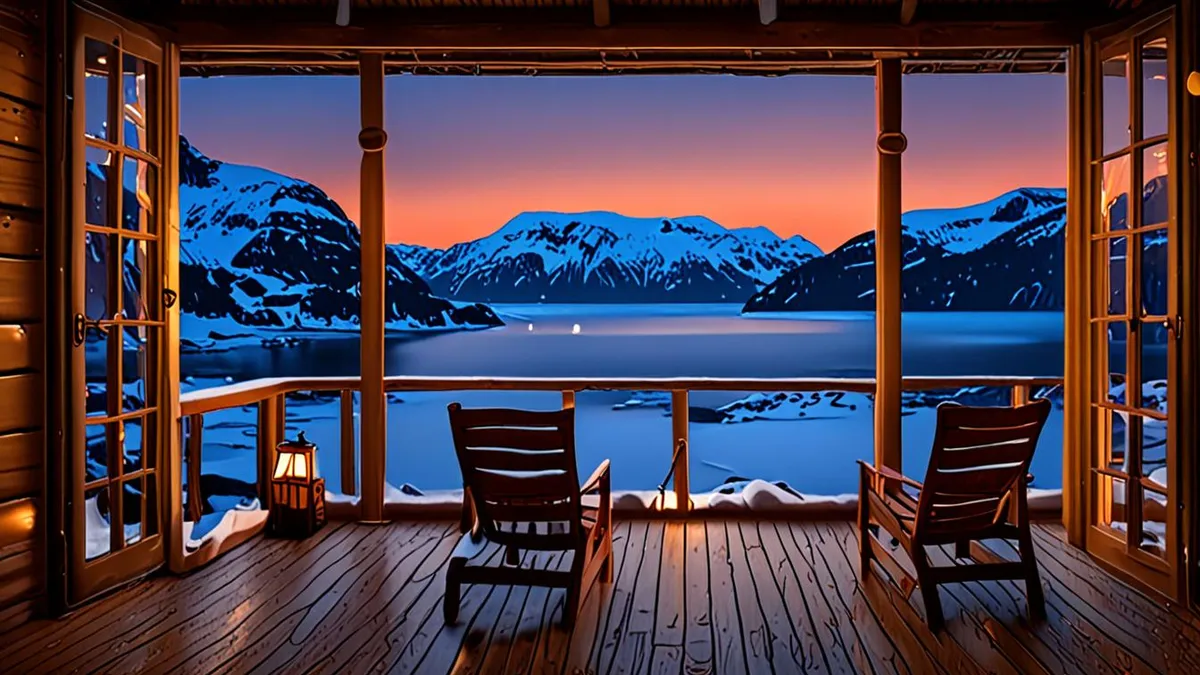
Couples tend to gravitate toward small timber lodges with fireplaces, wood-paneled common rooms and big windows facing the fjord or the sky. These properties usually have fewer rooms, quieter dining rooms and a more personal feel, which suits travelers who want atmosphere over amenities. An aurora-facing room in the far north or a fjord-view room near Bergen can turn an ordinary evening into the highlight of the trip.
What families should prioritize
Families have a different checklist. Ski-in access saves you hauling gear across icy parking lots, and on-site equipment rental means nobody has to fit boots the night before arrival. Flexible meal times matter more than most people expect, since tired kids rarely match a fixed 7 p.m. dinner seating after a day on the slopes. Look for lodges with family rooms or connecting cabins, and ask whether children’s ski lessons run from the property.
Lodge or cabin?
Finally, check what you’re actually booking. A lodge typically means staffed service, a restaurant and daily housekeeping, while a cabin is often self-catering with your own kitchen and wood stove. The difference in layout, services and price can be significant, so it pays to understand the key differences between a lodge and a cabin before you commit. Neither is better, but the wrong style for your group can change the whole trip.
Planning Your Norwegian Winter Trip
The short answer to Norway’s winter puzzle: travel between November and March, avoid the December and February price peaks if your budget is tight, and book your lodge 3-6 months ahead. Mid-range rooms typically cost NOK 1,200-2,500 per night, and high-season dates can push rates up by roughly 30-50%, so timing your trip matters as much as picking the property.
Just as important is matching the destination to your priority. Choose the fjords for dramatic water views, the mountain resorts for skiing, or Tromsø and Finnmark for your best chance at the northern lights. Get those three decisions right, and the long, dark Norwegian winter becomes an asset rather than an obstacle. If this guide helped you plan your trip, leave a comment or share it with a fellow traveler.